Friday, March 1, 2019

Day 1: Framing the Conversation Around Makerspaces

This March we're going to kick off  our third annual  30 posts in 30 days series around Creating, Making, and Learning.  This  2019  March Madness Maker Series will be focused on some of the questions that I've been using to frame the conversation around making  over the past few years.


The earlier conversations are usually focused around the WHAT questions.     Just exactly WHAT is a maker space?  I was once sitting across the desk from a principal who shared that she  had just googled "makerspaces' during our conversation so she would know what we are talking about.    The term Makerspaces conjures up different images in almost everybody who uses it.  Personally I like to use Space for Creating and Making  as a way to shake preconceptions that come with the term Makerspace.   A makerspace can be many different things to each of us.  It can have all types of tools, supplies, and equipment.   We've traveled to many makerspaces across the country and have yet to find any two alike. 

We have visited many different Makerspaces in our bus, and each of them have different tools and take on different formats.  This month I hope to introduce you to a few different configurations of makerspaces,  each with their own unique sets of tools and supplies.   
We have visited many different Makerspaces in our bus, and each of them have different tools and take on different formats.  This month I hope to introduce you to a few different configurations of makerspaces, each with their own unique sets of tools and supplies. 


Another area that many want to talk about is HOW do people MAKE?  There are so many different ways to approach making.  In this series we will explore different types of makes that you might see in a makerspace. This could range from a skill building make to a quirky expression of self.  I look forward to introducing you to some of the comments types of makes as we share projects from different schools. 


Probably one of the most important questions is the WHY question.  Simon Sinek encourages us to KNOW OUR WHY! And while I agree that knowing your why is one of the most important things you can talk about in the conversation about makerspaces,  it is NOT necessarily the first question you need to find the answers to.  Sometimes you just need to start Making!  And the more you make the more you will be able to articulate your why.  Too many people think that you have to know your why BEFORE you move forward.  I think knowing your why is a process and sometimes you just have to LAUNCH and the clarity about WHY will happen as you reflect on your process. 


 The WHO questions are not always obvious.  But they are important ones.  Without explicit attention to the WHO questions, you might accidentally end up creating a space that is not inclusive.  Unfortunately that is a challenging condition to remedy.  There are several ways to talk about WHO is making in your makerspace, and making sure that you have someone on your team who wears an equity lens in your conversations about making is helpful.


These conversations are not linear or hierarchal.  So don't expect a recipe or a step by step guide. We'll interview various members of the CREATE MAKE LEARN community and come at this conversation from many different perspectives, each meant to to get the gears turning helping to  frame your own conversations around making in education.


and of course we'll invite you to join the conversations already happening in our CREATE MAKE LEARN community. 


Tuesday, January 1, 2019

Resolutions!

Happy New Year to all!    On the first day of 2019, when all are making resolutions,  or making resolutions not to make resolutions,  I've decided that resolutions are okay!   Because what are resolutions but a 'goal'  you're working toward!  It's sort of like a maker project, and in this case the maker project is YOU!

You start to IMAGINE a version of you that is slightly different than the current version of you.
And then you take the first step towards what you are imagining!

Imagining a slightly different version of you does not mean the current version is bad or good.  It's just that you are thinking of something different!  Perhaps you want to change the view you wake up to every morning, so you move your bed... or maybe even change apartments.  It does not mean the old view was bad- you've just resolved to take some steps towards having a different view.

So what if you take steps towards a new version of you, and the results are not what you expected!
Some people call that a failed attempt - and that makes them uncomfortable! Which leads many to avoid resolutions!

But wait!  in the maker world we encourage you to look at a failed attempt as your FIRST ATTEMPT AT LEARNING!   Some even say, if you don't fail, you're not pushing your yourself hard enough!


And if you take steps towards your  new goal and the results are not what you expected you have two choices


1) Revise until you meet the goal as you imagined it.  Take a different approach to getting those results.  Use what you learned in the first attempt to figure out what didn't work, and consider what might work better.

or

2) Reimagine something different that is guided by what you've learned so far.  My projects usually end up very different than how I first imagined them.  And usually for the better.


So here it is New Year's Day, and now that I've decided that Resolutions are OKAY - the next question is 'What's mine?"  How can I take the maker project that is ME  and imagine a slightly different version of me.   It's tempting to go back to some old standby resolution of being more organized,  or getting rid of extra weight, and getting more exercise!    But this year,  I've decided that I would follow the ONE Word Resolution trend and pick one word to focus on as I continue to work on the maker project that is ME!   And after much thought, I've picked my one word!

My 2019 word is  LISTEN.

There is a lot of reasons I picked that word... but I think I'll keep those inside of me for now... and just focus on my word!  LISTEN!


Thursday, December 6, 2018

Creating, Making, and Learning in Clovis New Mexico


Clovis educators are creating, making, and learning today as they plan maker spaces for their schools.
They used design thinking to create a prototype to use with their students tomorrow!  Can't wait to help them test their designs.

[Slides]

[Photo Gallery]


Sunday, November 18, 2018

Memories of Learning to Code to support Project Based Learning

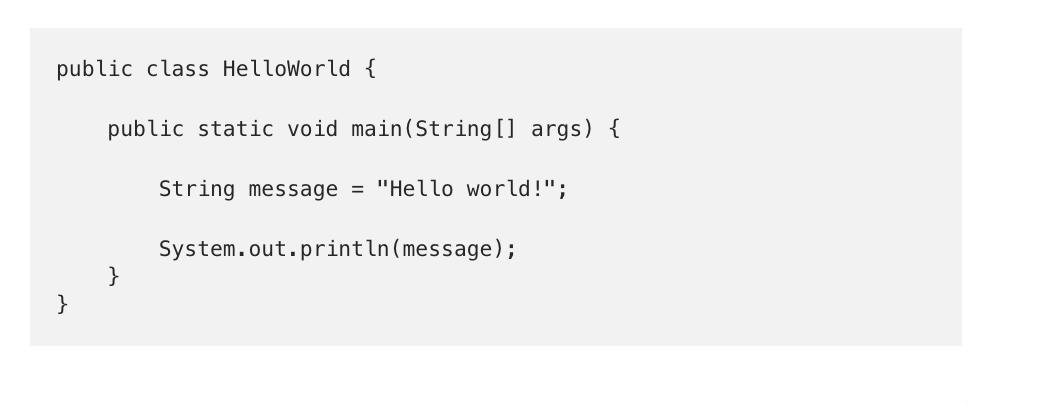
The following article came across my stream this morning while I was having coffee.  It brought back some vivid memories of a major milestone in my learning to code.    It was my first time trying to understand Object Oriented programming during my Masters Program at Marlboro College.    I so remember the feeling described in this article by Dawson Eliason - "Programming is taught exactly the wrong way."


"If you have any experience with Java, this is easy enough to understand. But if you’ve never seen a piece of code before, it may as well be Mandarin. Nonetheless, the student is taught that message is a variable of type string that holds “Hello world!” and System.out.println(message) prints the value of the variable to the console. The student is told, “Don’t worry about the ‘public class HelloWorld’ or ‘public static void main’ because you will learn more about them later.” They’re expected to take the instructor’s word for it, and continue to use these statements without understanding what they do or why they are necessary. But, hey, they know what a variable is."

Just because I identified with the feeling does not mean I agree or disagree with the premise of this article, but it has me thinking  and asking questions....

First of all... I remember wanting to understand every bit of syntax in our first Java programming assignments.

Yes... I had enough prior knowledge  to understand the Variable "Message".  That felt familiar, but I was asking "what does all that other stuff mean?  What is void?  Why static?"  It took me a while to let go of the NEED TO KNOW  and accept that it was okay to move on without knowing.   

I did have one other point of reference that allowed me to come to terms with moving on in this fuzzy state of mind.  Many many years ago, I entered first grade only knowing 6 words of English.  Our  French Canadian parents had insisted that we only speak French at home.  My mom had taught me "Yes"  "No"  "Please"  "Thank You"  "Salt" and "Pepper".  I guess she wanted me to be polite and have seasoned food. ;-)   I remember the 'blah blah blah"  all around me as my English speaking classmates were speaking in a language that I did not understand.  What I don't remember is the space in between that time and the time where I was comfortable speaking English on the playground.   It obviously happened without enough trauma to create a lasting memory.    So I accepted being in a fuzzy state of mind about many of the code snippets, and carried on.    

As I think of Dawson's premise,  I also am thinking of a tweetfrom @mraspinall that also came across my feed this morning


My motivation for enrolling in Marlboro's Java programming class was much different than many of the other students in this Java class; they were mostly working in IT.  I was a high school teacher who wanted to better support students who were working in a project based learning environment.  I was not teaching a coding class, but coding was quickly finding its way into many of our projects. This was similar to the scenario Dawson describes at the beginning of his blog post

"I learned programming through a relatively unorthodox method. I wanted to make a video game for my senior design project in high school.."

Dawson continues to describe  the learning environment that  Brian Aspall aspires to in his tweet  "Teaching kids to code means to make them think and solve problems through risk taking and trial & error"


"Despite the frustration, it turns out that this was actually the best way to learn how to write code. The unwavering sense that I was totally lost motivated my investigative problem-solving and prepared me for the daily struggle that comes with programming"

This set me off to thinking about a new alliance in Vermont with aspirations to provide teachers with professional development and inquiry-based computer science learning opportunities to successfully integrate computer science in the classroom.

This is exactly what I NEEDED back 18 years ago when I was enrolled in Marlboro's Java programming class.   And a fun fact is that one of the primary players in getting this Vermont Computer Science Alliance with Code.org,  University of Vermont,  Vermont Agency of Education, and Vermont Virtual Learning Cooperative is one of my classmates in that original Java programming class - Jennifer Frisbush @MsFribush  Unlike myself,  Jennifer is a computer science teacher,  while my focus is more on Project Based Learning - which of often leads to motivation in teachers and students to learn just enough code to get their project off the ground.

I will be actively watching the Vermont Computer Science Alliance project as it gets off the ground via Twitter @vermontcsa and hope that we can engage teachers who see the value of creating a pipeline of teachers and educators who have the foundational skills for solving complex problems in our world.   I think it's the right time for an initiative like this to be well supported.   Supporting innovative education initiatives like this is the first step in creating the pipeline that Brian Dowling  @be_d  describes in his recent article about Moonshots and Tough Tech on @xconomy 
“It’s pretty sad to me that there’s a decent chance that whole company wouldn’t exist without Elon Musk’s largesse,” he says. “That shouldn’t be a dice roll that SpaceX exists or not. There should be a healthy pipeline producing SpaceX’s if it’s the right time to have a company like that. 


I think  it is definitely 'the right time"  for Vermont Computer Science Alliance  and for us to extend beyond an Hour of Code in our school!  I'm excited to seeing more and more #vted schools offering support to this concept so that it is not a "dice roll"  whether or not our students get a chance to learn to code.


Thursday, November 1, 2018

Wednesday, October 10, 2018

EMMA Visits Waitsfield Elementary School


EMMA visits Waitsfield Elementary School


Slides


VoiceThread
Creating StoryScapes
Characters and their  Imaginary Habitats
Grades K-2


Creating Confidence with Creativity, Circuits, and Code. 
Grade 3-4  Group 1


Friday, September 28, 2018